Privacy Versus Public Safety
Inside Tempe's ALPR Debate
Dear Subscribers,
I hope you're cooling off like we are here in Phoenix.
I have something a little different for you. The following is a story I wrote for an investigative journalism master's program.
Like many of you, I've been following the national debate about automated license plate readers. The recent wave of AI doomsday soothsaying in the national media seems to have prompted a moment of collective introspection about the role of AI technology in our lives. ALPRs and data centers are both under intense scrutiny, and local governments are weighing in.
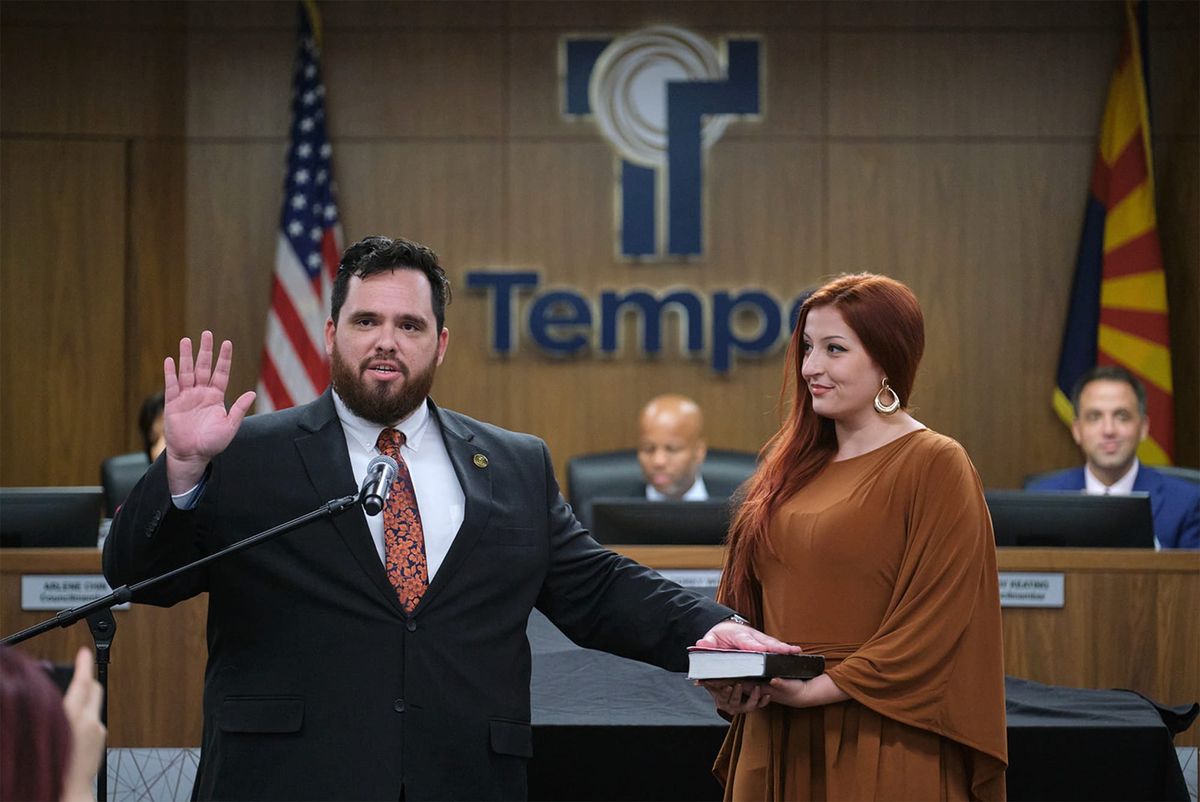
I sat down with newly elected Tempe City Councilman Bobby Nichols to discuss a city-wide ALPR ban he's drafting with the help of a couple hundred Tempe residents.
Here's the story. Enjoy!
///
Last summer, Bobby Nichols led a group of socialist door knockers to victory in a Tempe city council runoff. Now his coalition is facing its first formidable opponent: the private equitized surveillance state.
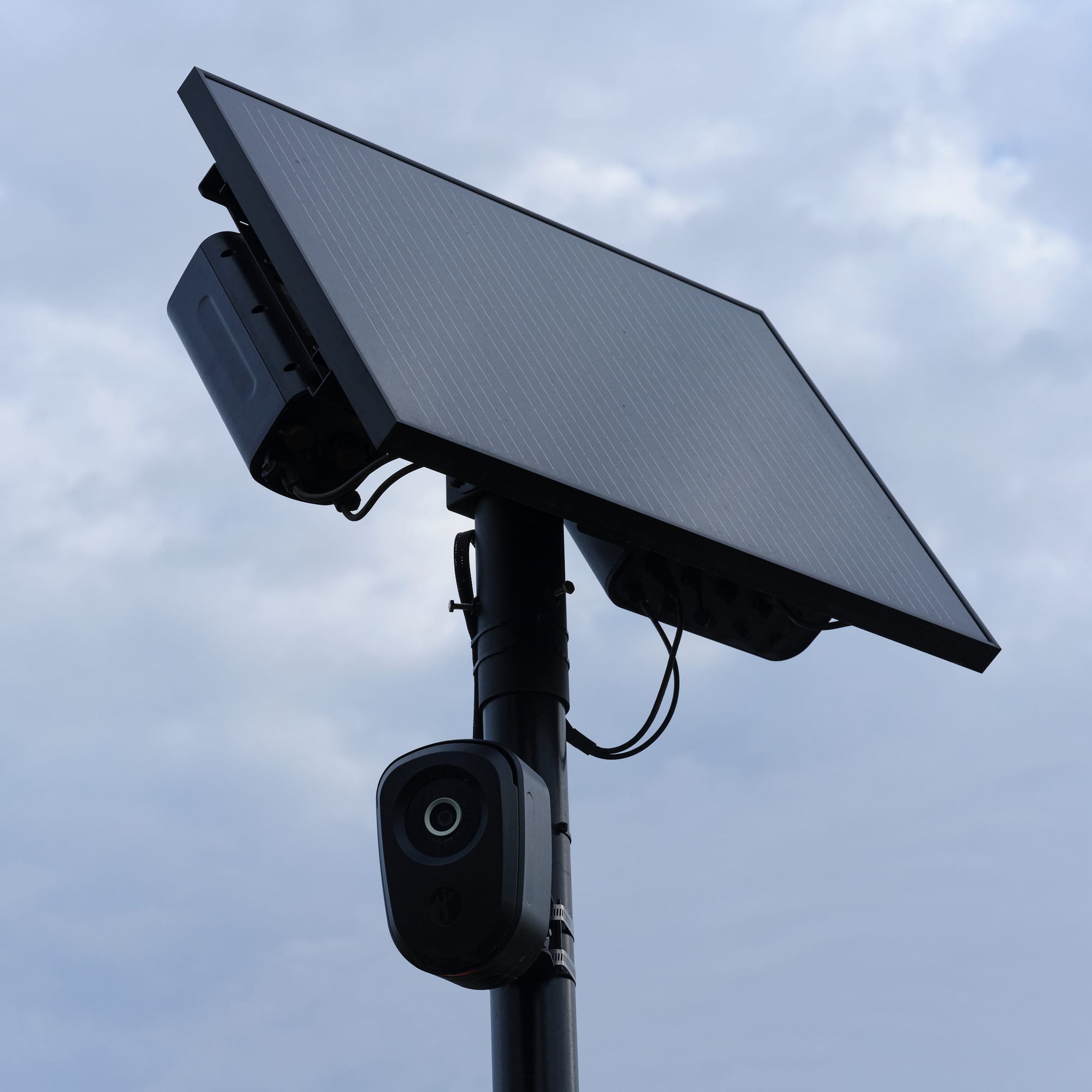
At the first hearing on a proposed ordinance to ban automated license plate readers (ALPRs), council member Nichols made the case that ALPRs pose significant risks to Tempe residents' civil liberties and privacy. This follows Tempe's cancellation of its contract with ALPR vendor Flock Safety last month.
Nichols drafted four versions of the ordinance to incorporate residents' concerns. Reading from the recent draft, Nichols said: "No city agency under this ordinance shall be permitted to acquire, install, operate, maintain, borrow, lease, subscribe to, accept — including by gift, grant, trial or pilot program — or use any ALPR system. No city agency shall query any ALPR system or ALPR data.”
In the weeks before the hearing, Nichols held two community input sessions and circulated an online survey that received nearly 900 responses from Tempe residents. In a Sept. 21 interview, he detailed the findings. "Protecting privacy rights is a bipartisan, even non-partisan value within American life," Nichols said. "70% of respondents, including several members of law enforcement, agreed that we should have a ban on ALPRs."
Some council members disagreed. After Nichols read the ordinance, Council Member Doreen Garlid voiced concerns about the process's speed. "When we voted to get rid of the Flock contract on Aug. 26, the reasonable expectation I had is that the next step would be to put up safeguards in the first quarter, adding to the safeguards we already had," Garlid said. "It just seems like we're rushing through this."
Following a brief statement, Garlid invited Tempe Police Chief Kenneth McCoy to the dais to present the department's perspective. "ALPRs have helped solve many crimes in the city — serious crimes, from homicides to sexual assaults," McCoy said. "What we also know is that since we decommissioned this technology, there have been crimes we have not been able to solve: shootings, stolen vehicles."
McCoy noted that a 16-year-old Tempe resident is currently in intensive care following a hit-and-run near a now-decommissioned Flock Safety camera. He also raised concerns about multi-jurisdictional task forces that have faced complications from the lack of ALPR data access.
Council member Brooke St. George asked McCoy why Tempe PD had not presented statistical data on case closures. "I would still like to see that," she said. "I don't know if we have it, if we just haven't been doing it, but that was a major oversight on our part.”
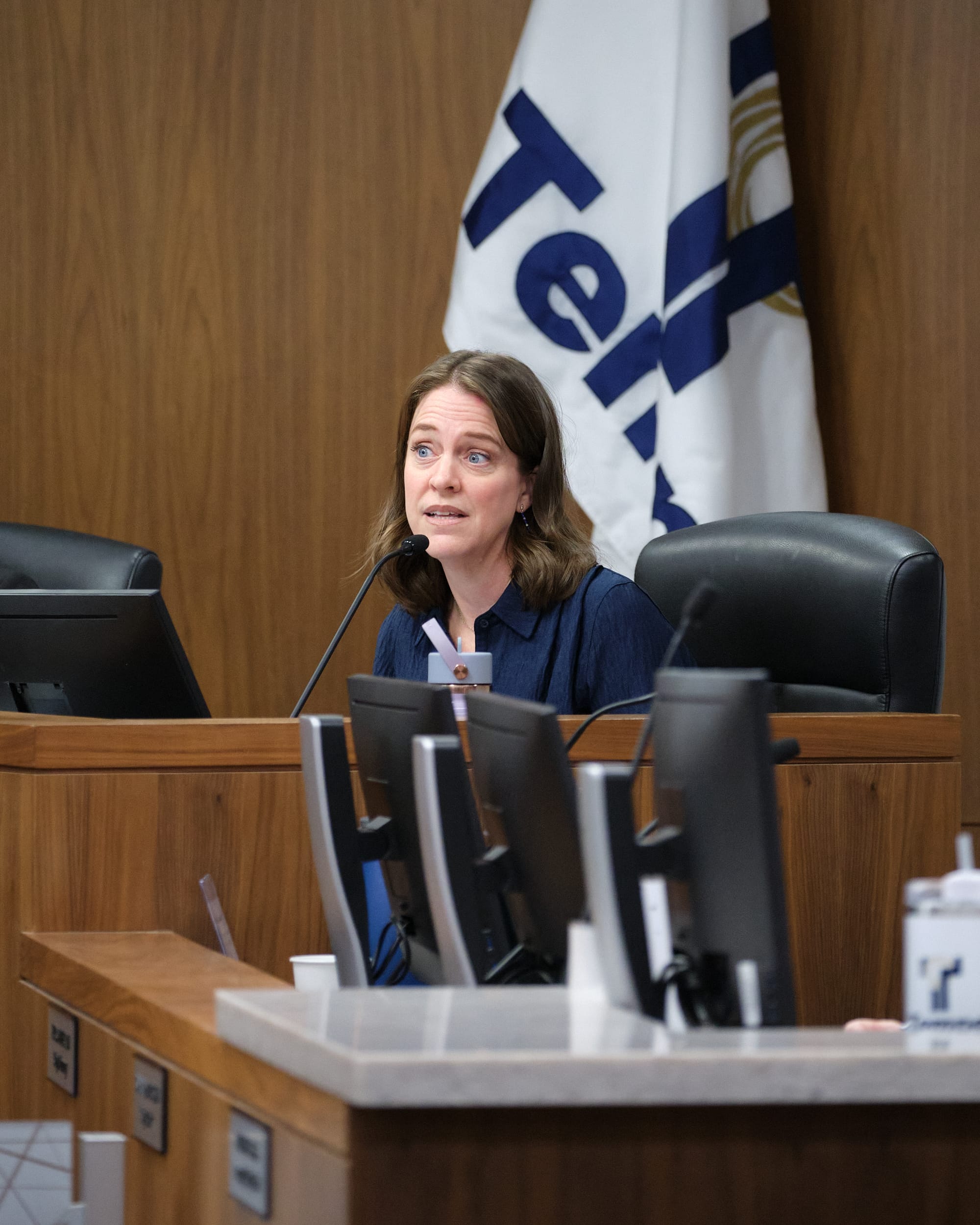
Toward the end of her exchange, St. George reminded McCoy and the public about ALPR companies' incentives and the reason for their rapid national adoption. "The main profit driver for this technology — as much as I would like to believe it is altruism and that they truly care about public safety — is tracking and selling data," she said. "That is how they make their money."
Two dozen speakers signed up to voice concerns during three-minute time slots. The recurring themes were privacy, safety, crime data and fears about the looming, undemocratic AI-powered surveillance state.
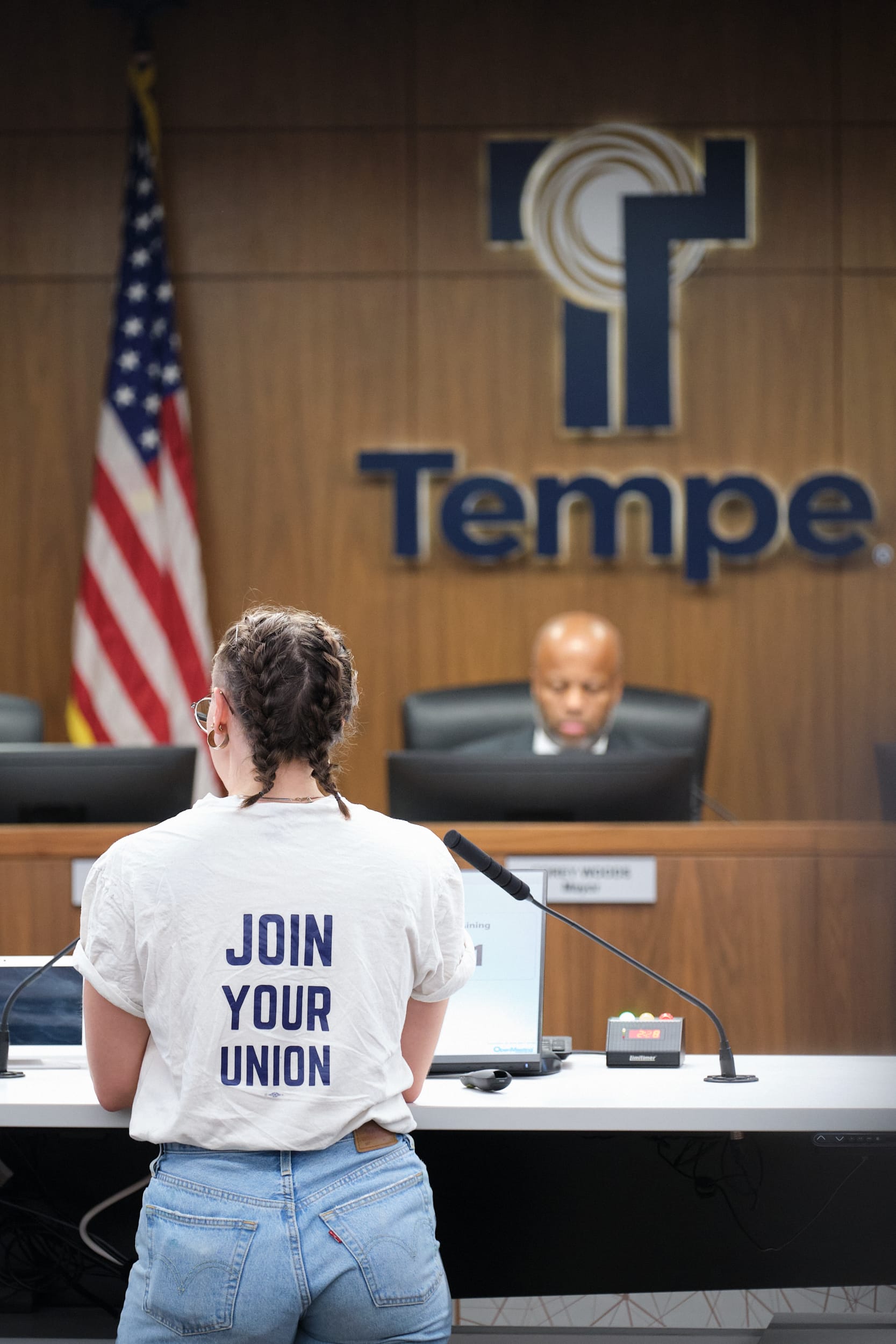
One concerned Tempe resident was ASU employee Hypatia Meraviglia. She shared the concerns of many speakers that night: "I don't want my data sold to line the pockets of corporations just because I'm walking around my beautiful city. I don't trust corporations or police to put checks in place to prevent abuse of our data out of the goodness of our hearts."
A final draft of Tempe's ALPR ban is up for a vote on Oct. 15.